
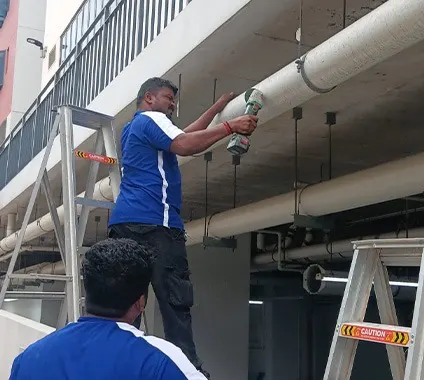
Pipe repair can range from replacing a fitting or short accessible section to a broader replacement when damage, corrosion or poor condition extends beyond one point.
Finding the actual leak source
The wet area is not always where the pipe failed. Water can track along a surface, inside a cabinet or through a wall before becoming visible. The source should be confirmed before finishes are opened or repaired.
- Visible dripping or spraying
- Wet wall, cabinet, ceiling or floor
- Corrosion or staining around a joint
- Reduced pressure at connected fixtures
Factors that affect the repair
The plumber considers pipe material, joint type, damage extent, access, surrounding finishes and the condition of nearby pipework. A local repair may be appropriate when the surrounding section remains serviceable.
Widespread corrosion, repeated leaks or inaccessible routing may require a larger scope. The correct method should be based on the condition found rather than a generic promise.
Information to send before attendance
Provide wide and close photos, a short video, the property address, whether closing a local valve stops the leak and any access restrictions. Keep electrical items away from water.
Share the property location, symptoms and photos.
General information cannot confirm the exact cause without assessing the affected fixture and pipe access.